
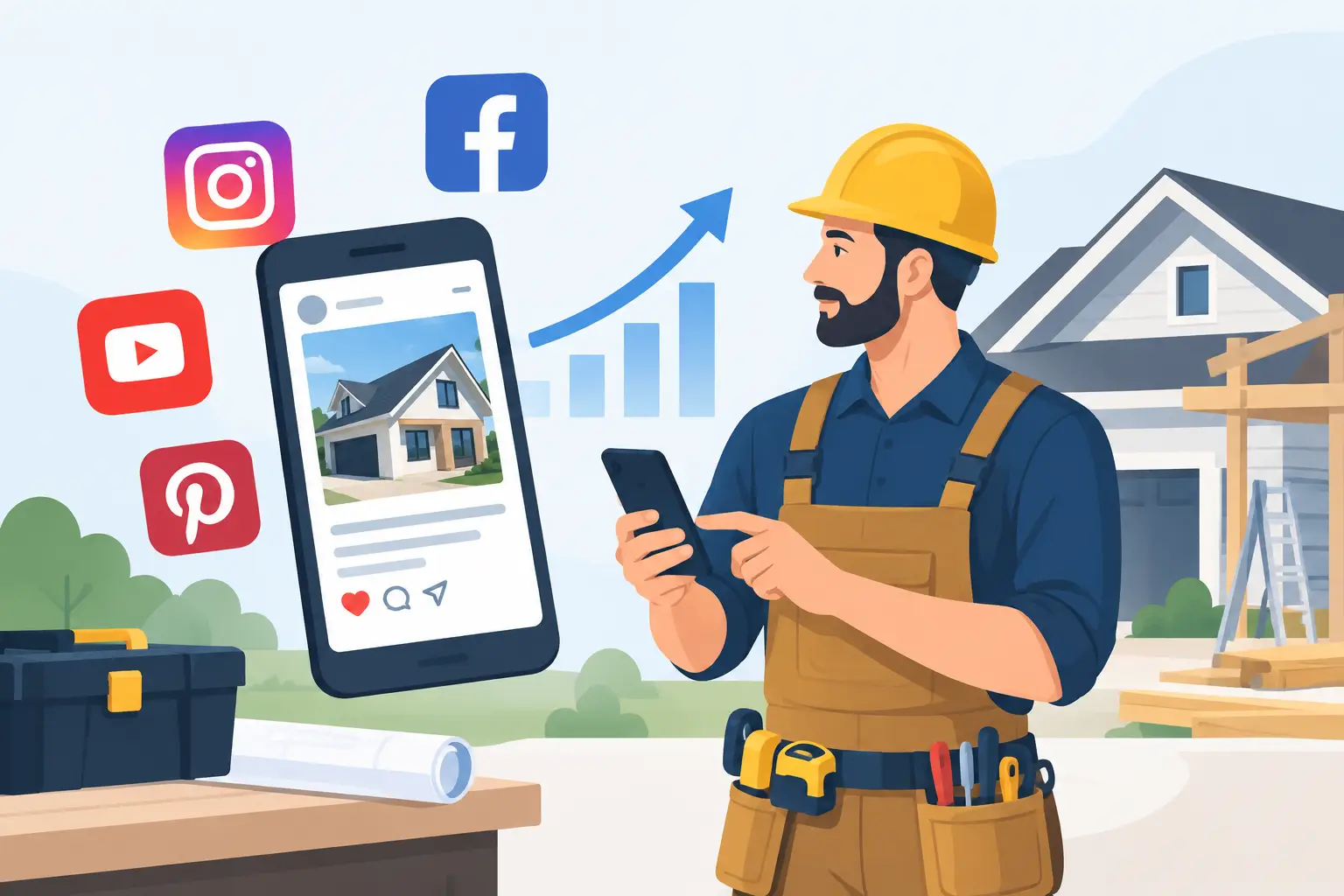
A homeowner with a leaking roof or an outdated kitchen is not looking for clever branding. They are looking for proof that a local contractor can do the job, show up when promised, and communicate clearly. Social media advertising for contractors works when it puts that proof in front of the right people before they call the next company on the list.
The opportunity is real across DFW, but so is the waste. A boosted post with a pretty project photo can collect likes from people outside your service area while producing zero estimates. Effective campaigns are built around a specific service, a local audience, a clear next step, and a team ready to respond fast.
Why Contractors Need a Different Social Ad Strategy
Contracting is a high-trust purchase. Whether someone needs HVAC work, a bathroom remodel, foundation repair, landscaping, or a new roof, they are often inviting a crew onto their property and spending money they cannot afford to waste. Your ads need to reduce that uncertainty quickly.
That means showing real work, real people, and real service areas. A polished stock image may look clean, but it rarely carries the weight of a short video from a completed project in Arlington, Mansfield, or Fort Worth. Homeowners want evidence that you understand the work and operate nearby.
Social platforms are also better at creating demand than capturing urgent search demand. Someone searching for “emergency plumber near me” is ready to act now. Someone scrolling Facebook may not be actively shopping for a remodel, but a compelling before-and-after project can put your company on their radar weeks before they request an estimate. Both channels matter, but they do different jobs.
Build Social Media Advertising for Contractors Around One Offer
Trying to advertise every service your company provides in one campaign creates a fuzzy message. A homeowner should understand what you do and what to do next in a few seconds. Start with one service that has a healthy profit margin, a defined audience, and enough crew capacity to handle new work.
For example, a roofing company might promote a free storm-damage inspection in a limited service radius. A remodeling company may offer a complimentary kitchen design consultation. A landscaping contractor could focus on seasonal drainage solutions rather than general lawn care. The right offer depends on the job cycle, competition, and how quickly your team can follow up.
Avoid offers that attract people who only want a price with no intention to move forward. “Get a free quote” can work, but it is generic. A more useful message explains the outcome: find out what is causing the water issue, see whether a roof qualifies for repair, or get a realistic renovation plan for your space.
Match the Offer to the Customer’s Urgency
Urgent repairs need direct ads with a phone call option and a promise your office can actually keep. Planned projects benefit from education and inspiration. A homeowner thinking about a patio, shower upgrade, or new flooring may respond better to project photos, budget guidance, and an estimate request form.
Do not advertise same-day service if your schedule cannot support it. Fast ads that lead to slow responses burn budget and trust at the same time.
Use Proof That Makes Local Homeowners Stop Scrolling
The best contractor creative rarely feels like an ad produced in a studio. It feels like a competent local business showing its work. Short vertical videos are especially useful because they let prospects see the condition of a property, the process, and the finished result in less than a minute.
Show the crew preparing a work area, explain a problem in plain English, or walk through a completed job with the homeowner’s permission. Keep the first few seconds focused on the issue or result. “This patio was sinking toward the house” is more compelling than a long company introduction.
Photos still matter, especially for visual trades, but use them with purpose. A before-and-after image should make the difference obvious. Add a simple caption that names the service, city, and next step. Testimonials can also work well when they are specific: punctuality, cleanup, workmanship, communication, or a problem solved after another company failed to diagnose it.
Make Every Ad Easy to Understand
A strong ad generally answers four questions without making the reader work: What problem do you solve? Who do you serve? Why should they trust you? What should they do now? If the answer is buried under logo animations, jargon, or five separate calls to action, simplify it.
Use your actual business name, recognizable branding, and a consistent phone number. Local customers often see an ad more than once before they take action. Familiarity helps, especially when it is supported by solid reviews and a professional website.
Target a Service Area, Not Everyone in Texas
Location targeting is where many campaigns get sloppy. A contractor based in Kennedale may serve parts of Fort Worth, Arlington, Burleson, Mansfield, and Mid-Cities communities, but not every zip code is equally profitable. Travel time, crew availability, average job value, and local competition should shape the campaign radius.
Build separate ad sets when markets behave differently. A remodeling offer aimed at higher-value neighborhoods may need different messaging than a repair campaign aimed at a broader area. Separate campaigns also make it easier to see where qualified calls are coming from instead of treating the entire metroplex as one audience.
Audience targeting should be helpful, not overly narrow. Social platforms can identify broad homeowner-related characteristics and interests, but the platform will not know whether a person truly needs a new roof this week. Start with geography, age ranges that fit your buyer, and a message tied to a clear service. Then let actual lead quality guide adjustments.
Retargeting is often the most efficient layer. People who watched your project video, visited a service page, or started a form already know your name. Follow up with a testimonial, project gallery, or a direct invitation to schedule an estimate. They may need a little more confidence, not another generic ad.
The Click Is Only the Beginning
An ad cannot carry the entire sales process. When a prospect clicks, they should land on a page or form that matches the service in the ad. If the ad promotes bathroom remodeling, do not send them to a crowded homepage that also talks about roofing, fencing, and general repairs.
Keep the form short enough to complete on a phone. Name, contact details, project type, location, and a brief description are usually enough for an initial conversation. If photos would help qualify the job, ask for them as an option rather than making the form feel like paperwork.
Response time matters just as much as ad design. A lead who hears back in five minutes is far more likely to book than one who receives a reply the next morning. Set ownership before the campaign launches. Someone needs to answer calls, monitor forms, document outcomes, and follow up more than once when appropriate.
For owner-led companies, this is often the bottleneck. If the owner is on a jobsite all day, a trained office manager, dispatcher, or answering process can protect the investment. TechXperts helps local businesses connect marketing, websites, analytics, and practical workflows so leads do not disappear into an inbox.
Measure Qualified Opportunities, Not Likes
Likes, video views, and comments can indicate whether an ad is getting attention, but they do not tell you whether it is making money. Track the number of leads, how many were reachable, how many fit your service area, how many received estimates, and how many became paying jobs.
Cost per lead is useful only when paired with lead quality. A campaign producing $20 leads may look better than one producing $65 leads until you learn that the cheaper leads are outside your service area or shopping for work you do not perform. The campaign with fewer but better estimates may be the clear winner.
Give a new campaign enough time and budget to collect meaningful data, then make one change at a time. Test a new video, offer, audience area, or form flow, not all four at once. This keeps your decisions grounded in results instead of guesswork.
Turn Good Work Into the Next Job
The strongest contractor campaigns are not built from marketing tricks. They are built from the work your team already does well: honest explanations, clean job sites, visible results, and reliable follow-through. Capture those moments consistently, use them to earn local attention, and make it easy for the right homeowner to reach your team when the time is right.

0 Comments