
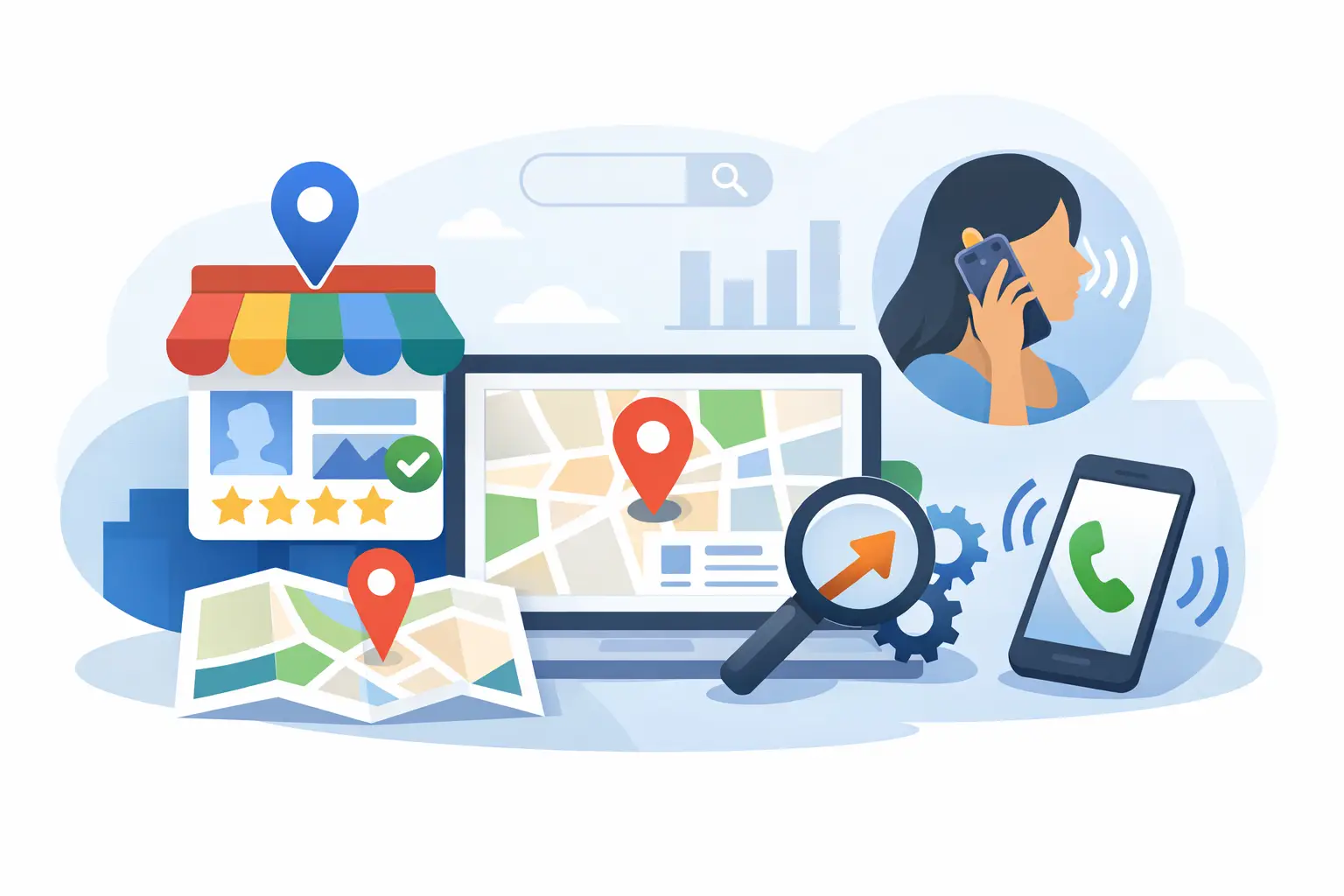
When a customer in Arlington searches for an electrician, accountant, contractor, or IT help, they are rarely looking for a brand story first. They want a trusted local option, clear hours, a working phone number, proof from real customers, and an easy next step. Google Business Profile optimization is how your company earns that moment on Search and Maps instead of handing it to a competitor.
A profile is not a set-it-and-forget-it directory listing. It is a local lead-generation asset. Done well, it helps qualified people call, request directions, visit your website, or message your business. Done poorly, it creates uncertainty: wrong hours, unanswered reviews, thin service details, duplicate listings, or a profile that looks abandoned.
Start Google Business Profile optimization with accuracy
Google needs confidence that your business is real, active, and relevant to the searcher. Your customers need confidence that you can solve their problem. Accurate core information handles both jobs.
Claim and verify the profile you control, then make the business name match the real-world name on your storefront, vehicles, invoices, and website. Do not add a string of city names or services to the name just to chase rankings. That approach violates Google guidelines and can trigger an edit, suspension, or loss of visibility.
Choose the most specific primary category available. A plumbing company should not default to a broad business category if a more precise option fits. The primary category tells Google what you do; secondary categories can support legitimate additional services. Do not select every category that seems remotely related. A focused profile is easier for Google and customers to understand.
Keep your address, phone number, website, hours, and service area current. If you serve customers at their location and do not receive them at your office, use the proper service-area setup instead of displaying an address that customers should not visit. Service areas should reflect the places you actually serve, such as Fort Worth, Kennedale, Mansfield, Burleson, or nearby DFW communities, not a giant radius designed to cover the state.
Hours deserve special attention. Update holiday hours before customers discover a locked door or unanswered call. If your operation offers after-hours help, make sure the profile communicates that accurately rather than promising availability your team cannot consistently deliver.
Make the profile answer the customer’s first questions
Search visibility is only half the job. A profile must turn attention into action.
Write a business description in plain English. Start with what you do, who you help, and where you work. Then add the details that distinguish you: years of experience, specialties, service approach, or operational advantages. A local roofing company might emphasize inspections, repairs, and replacement work for homeowners across Tarrant County. A professional office might emphasize appointment-based service, clear communication, and convenient parking. Avoid stuffing the description with repeated city names and keywords. It reads poorly, and it does not build trust.
Use the Services section to describe individual services customers actively search for. Give each service a clear name and a short, useful explanation. This is the place to clarify what is included, what types of customers you serve, and which related needs you handle. Products can also work well for businesses that sell defined offerings, packages, memberships, or giftable services.
Photos matter because local customers make fast credibility decisions. Use current exterior photos so visitors can find you, interior photos that set expectations, team photos that show real people, and job or project photos that demonstrate your work. A contractor can show completed projects. A restaurant can show its dining room and popular dishes. A professional service business can show its office, staff, and customer-ready environment.
Skip generic stock images when possible. Real photos are not always polished, but they are believable. Add them steadily rather than uploading everything once and leaving the gallery untouched for two years.
Reviews are a reputation system, not a one-time campaign
Reviews influence whether people choose you, and they give Google additional signals about customer experience. The best review strategy is simple: ask consistently after a real, completed interaction.
Train your team on the right moment to ask. It might be after a successful project, a completed appointment, a resolved support request, or a repeat purchase. Make the request personal and straightforward. Do not pressure customers for five stars, offer incentives, or have staff, friends, and family generate artificial reviews. Those shortcuts can damage the profile you worked to build.
Respond to every review with care, especially the critical ones. Thank positive reviewers without pasting the same reply each time. For negative feedback, keep the response calm, factual, and privacy-conscious. Acknowledge the concern, state your desire to make it right, and invite the customer to continue the conversation directly. Future customers are reading your response to judge how you handle problems.
Review content can also guide business improvements. If customers repeatedly praise fast communication, make that strength visible in your profile and website. If several people mention confusion about billing, arrival windows, or appointment scheduling, fix the process instead of only managing the public comments.
Keep your local presence active without creating busywork
Regular profile activity shows customers that someone is paying attention. It does not require daily posting or a collection of filler updates. One useful update tied to a real service, seasonal need, event, promotion, or customer question is better than a stream of generic marketing posts.
For North Texas businesses, seasonality provides practical topics. HVAC providers can address summer readiness. Contractors can discuss storm-related inspections. Tax professionals can clarify appointment timing. Service businesses can announce holiday scheduling before the rush. Each update should give a customer a reason to act, not simply repeat your business name.
Monitor the questions and answers area as well. Customers may ask whether you offer estimates, accept walk-ins, provide a particular service, or cover a certain city. Answer quickly and accurately. An unanswered question can become a lost lead, especially when a competitor makes the decision easier.
Connect profile activity to the rest of your marketing
A Google Business Profile cannot carry local marketing alone. Google compares the profile with the information it finds elsewhere, including your website, local citations, customer feedback, and general online prominence. Your website should clearly identify your services, service locations, contact details, and the reasons a customer should choose you.
Use a dedicated, relevant website page as the profile destination, not a confusing homepage when a specific service page would better match the listing. Track calls, direction requests, website clicks, messages, and booked appointments where available. Adding tracking to the website URL can help separate profile traffic from other visitors in your analytics without changing the customer experience.
Do not expect rankings to behave like a fixed checklist. Local visibility depends on relevance, distance, and prominence. You can improve relevance with accurate categories, services, and information. You can strengthen prominence through a credible website, genuine reviews, and consistent business signals. Distance is different: a searcher close to a competitor may see that company first, even if your profile is better managed.
That is why reporting should focus on business outcomes, not only ranking screenshots. More calls from the right service area, more direction requests, better-quality website visits, and more booked work are the metrics that matter.
Avoid the profile mistakes that cost local leads
The most expensive errors are usually preventable. Duplicate profiles split trust and confuse customers. Keyword-stuffed business names invite enforcement. Old phone numbers and wrong hours send ready-to-buy customers elsewhere. Neglected reviews make a healthy business look indifferent. A profile created by a former employee or agency can become a major headache if ownership was never properly shared.
Set a simple monthly routine: confirm key business details, review new customer feedback, add a few current photos, check questions, and compare profile actions with actual leads. If your profile has been suspended, edited unexpectedly, or is producing visibility without calls, do not make random changes all at once. Diagnose the cause, document the business details, and correct the listing carefully.
For small businesses already juggling customers, staff, technology, and cash flow, this work can slip down the list. TechXperts helps DFW businesses connect profile management, websites, analytics, and local SEO so marketing does more than look busy.
Your next customer may be standing a few miles away with a problem they need solved now. Give them accurate information, visible proof, and a clear way to reach you, then keep showing up like the local business you want them to trust.


0 Comments