
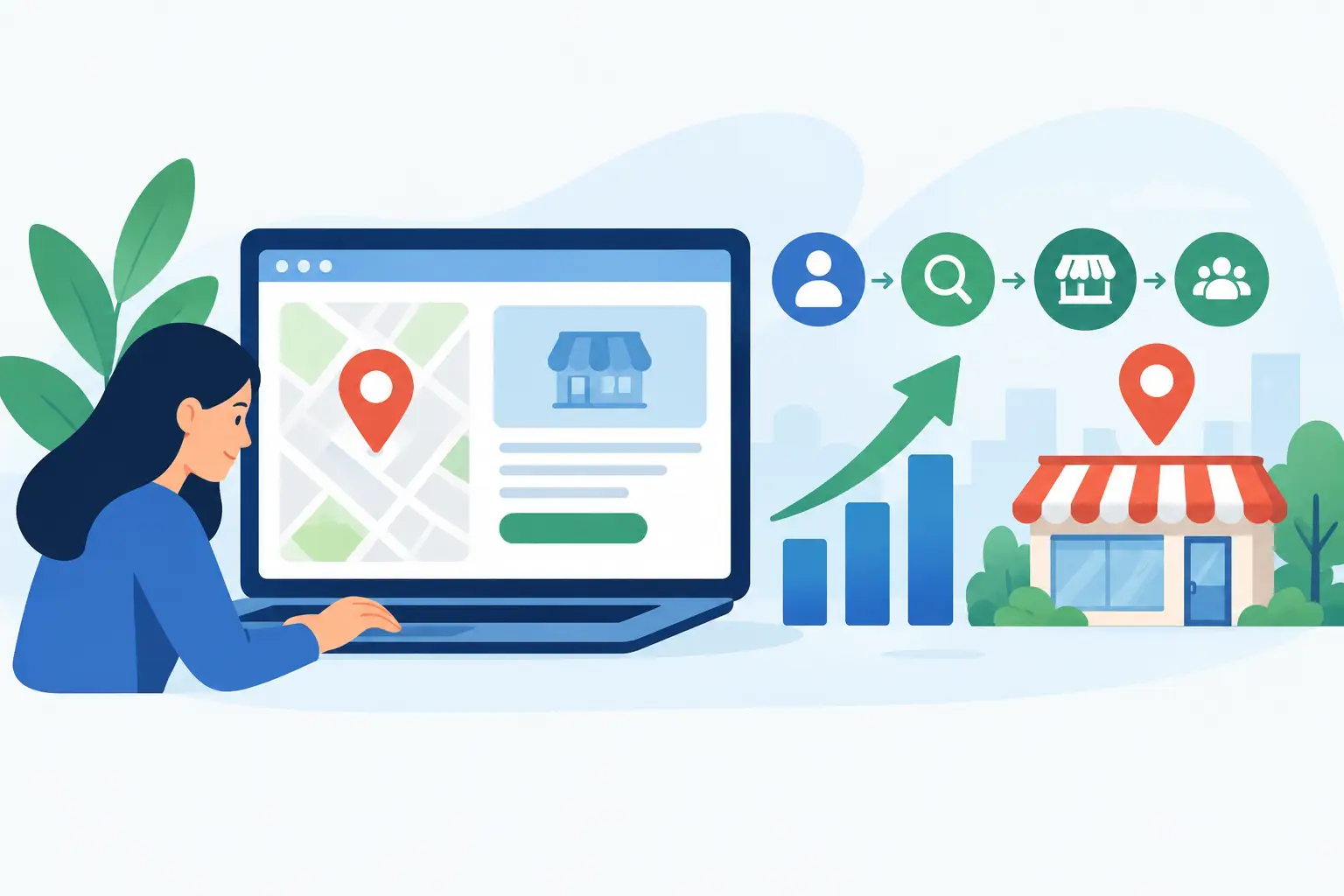
A website can look polished, rank well, and still leave money on the table. If visitors land on your page, scan for ten seconds, then leave without calling, requesting service, or booking an appointment, the issue is not always traffic. Learning how to improve website conversions means removing the friction between a customer’s problem and their next step.
For a small business in DFW, a conversion is not limited to an online sale. It might be a phone call from a homeowner with a computer emergency, a quote request from a contractor, a consultation booking, or a visitor who asks for a website audit. The right goal depends on your business, but every high-performing site gives people a clear reason to act now.
Start With the Conversion You Actually Want
Many business owners ask for more leads when their site has never been designed around a specific action. A page cannot effectively push visitors toward five different destinations at once. If the main goal of a service page is to generate calls, make calling the obvious next move. If the goal is quote requests, build the page around a short, low-stress request form.
Choose one primary conversion for each key page, then support it with one secondary option. For example, an IT support page may prioritize calling for immediate help while offering a contact form for non-urgent projects. A web design page may prioritize scheduling a consultation and offer a portfolio review as the secondary path.
This matters because intent changes by page. Someone searching for urgent network support is ready for a fast response. Someone reading about SEO may still be comparing options. Treating both visitors the same creates unnecessary pressure for one group and too little direction for the other.
Make Your Offer Clear Before the First Scroll
Visitors should not have to decode what you do, where you work, or why they should contact you. The top of the page needs plain language that answers three questions quickly: What problem do you solve? Who do you help? What should the visitor do next?
Skip vague statements such as “innovative solutions for your business.” A Kennedale office manager dealing with unreliable Wi-Fi wants to know whether you can fix the issue, how quickly help is available, and whether your team understands small-business operations. A stronger message is specific, practical, and tied to an outcome: reliable networks, secure backups, better workflows, and support when it is needed.
Your primary call to action should match that promise. “Get Help Now,” “Request a Free Website Audit,” and “Schedule a Business Technology Consultation” tell the visitor what happens next. “Learn More” can work as a secondary button, but it rarely creates urgency on a page meant to produce leads.
Keep Calls to Action Easy to Find
A good call to action should appear near the top of the page, after major proof points, and again near the bottom. That is not repetition for its own sake. People decide at different moments. Some are ready after reading the headline; others need service details or testimonials first.
On mobile, make the action large enough to tap without effort. Use direct button labels rather than clever wording. A visitor should never have to wonder whether a button opens a form, starts a call, or sends them to another page.
Improve Speed, Mobile Use, and Basic Reliability
A slow or broken website is a conversion problem before it is an SEO problem. When a page stalls, buttons fail, or forms do not submit, potential customers do not wait around. They go back to search results and contact the next company.
Start with the essentials: compress oversized images, remove unnecessary page features, use dependable hosting, and check whether the site behaves correctly on common mobile devices. Test the contact form yourself. Confirm confirmation messages arrive where they should. Check click-to-call buttons, map directions, appointment tools, and any live chat feature.
There is a trade-off here. Motion effects, oversized video headers, and elaborate interactive sections may look impressive in a design review, but they can slow a site down or bury the message. For most local service businesses, fast loading and easy navigation will outperform visual tricks.
Reduce Form Friction
Every form field asks a visitor to do more work. If you need only a name, phone number, email, and short description of the problem, do not demand a full business profile, budget, preferred meeting time, and six other details on the first contact.
Short forms usually create more inquiries. Longer forms can produce better-qualified leads. The right balance depends on the value and complexity of the service. For urgent support, keep it brief. For a large website or systems project, a few qualifying questions can save time for both sides.
Build Trust Like a Local Business, Not a Mystery Vendor
People are cautious when choosing someone who will touch their business systems, customer data, marketing budget, or office workflow. Trust signals give them a reason to believe your business is established, accountable, and ready to help.
Use real customer testimonials that describe a result, not just praise. “They were great” is pleasant but weak. A testimonial explaining that a company restored reliable network access, improved backup confidence, or generated stronger local leads tells a visitor what success could look like.
Local relevance also matters. Mention the communities you serve where it makes sense, such as Kennedale, Arlington, Fort Worth, Mansfield, Burleson, and the broader DFW area. Add accurate contact details and clear business information. Show real team photos, project examples, certifications, or case studies when available. Generic stock imagery is not automatically bad, but it should not be the only proof that your company exists.
TechXperts takes this practical approach because small businesses do not need more technology talk. They need to know who will answer, what gets fixed, and how the work supports productivity and growth.
Match Each Landing Page to Search Intent
One of the fastest ways to lose conversions is sending every visitor to the homepage. A homeowner with a virus concern, a business owner seeking cloud setup, and a company searching for SEO help have different needs. They should see pages that speak directly to those needs.
A focused landing page should reflect the words and urgency behind the search. If a person searches for business backup services, lead with the risks of data loss, how backup is monitored, and what recovery support looks like. Do not make them hunt through a broad list of unrelated services.
The same rule applies to marketing pages. A visitor looking for local SEO wants to understand visibility, qualified traffic, reporting, and realistic expectations. Promising instant rankings may get attention, but it damages trust. Good conversion copy is confident without making claims you cannot control.
Use Analytics to Find the Leak
You do not need to guess why a website is underperforming. Track the actions that matter: calls from the site, form submissions, appointment requests, chat conversations, and visits to thank-you pages. Then compare those actions with page traffic, device type, source, and location.
If a service page receives plenty of traffic but few inquiries, inspect the page before buying more ads or writing more content. Is the offer clear? Is the call to action visible? Does the page load slowly on mobile? Are visitors leaving after the first section? The answer often points to a practical fix.
Look for patterns rather than reacting to a single week. Seasonal demand, advertising changes, and a small number of visits can distort results. For most small businesses, a month of meaningful data is more useful than daily panic over a few clicks.
Test One Meaningful Change at a Time
Conversion improvement works best as a steady process, not a one-time redesign. Change a headline, form length, button label, testimonial placement, or mobile layout, then measure what happened. If you change everything at once, you may see a result but have no idea what caused it.
Start with pages that already receive traffic. Improving a page with 500 monthly visitors is usually more valuable than polishing a page that only gets 10. Focus first on the pages tied to your highest-value services and the searches that bring customers closest to contacting you.
Do not chase every marketing trend. The best conversion strategy is the one that makes it easier for a real customer to understand your value, trust your business, and take the next step. When a visitor can reach the right person quickly and feels confident they will get useful help, your website starts doing the job it was built to do.

0 Comments