
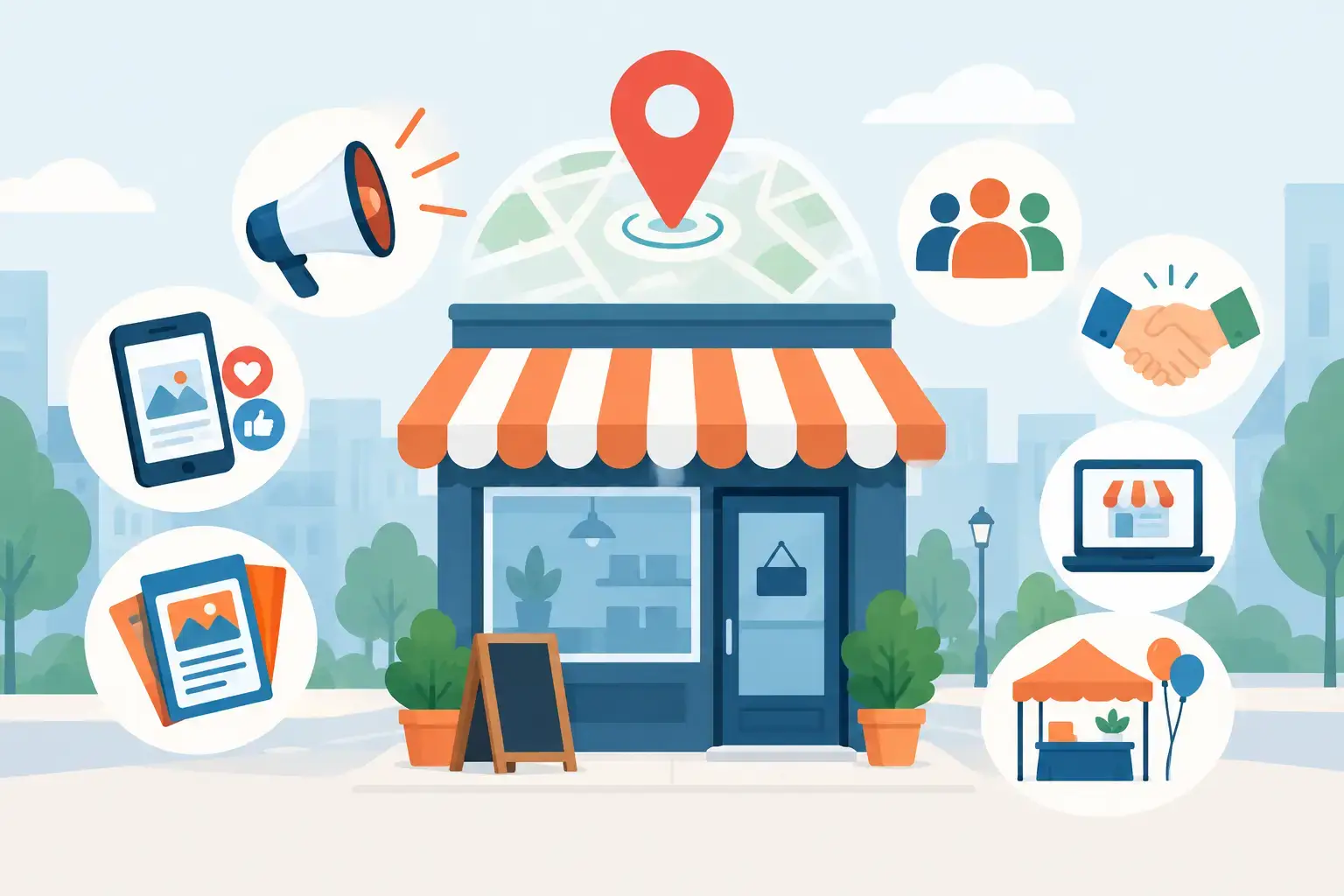
A Fort Worth homeowner with a burst pipe, an Arlington office manager with a network problem, and a Mansfield family looking for a nearby restaurant do not browse like national shoppers. They search, ask neighbors, notice signs, and choose the business that looks ready to help. Effective local advertising ideas put your company in those decision-making moments without burning through your budget on people outside your service area.
For most DFW small businesses, the answer is not one flashy campaign. It is a connected set of practical signals: a strong local search presence, clear offers, visible proof, and follow-up that keeps promising leads from going cold. Start with the channels your customers already trust, then measure which ones create calls, appointments, walk-ins, and quote requests.
Effective Local Advertising Ideas That Bring Real Leads
1. Turn your Google Business Profile into an active sales tool
Your Google Business Profile often makes the first impression before a prospect reaches your website. Make sure your service areas, business hours, categories, phone number, and services are accurate. Add current photos that show your team, work, office, vehicles, or finished projects.
Post updates when you have a seasonal offer, community event, new service, or useful local tip. More importantly, ask satisfied customers for honest reviews and respond to every review professionally. A profile with recent activity and real customer feedback gives a local buyer a reason to call you instead of the next name in the search results.
2. Run tightly targeted Google Ads for high-intent searches
Google Ads can work quickly when you target a specific problem and a tight geography. A contractor might run ads for emergency repairs in Arlington and Mansfield. A professional office might focus on searches for a service plus “near me” or a nearby city.
Do not send every ad to your home page. Match the ad to a page that answers the searcher’s question, clearly states the service area, and makes it easy to call or request an estimate. Start with a manageable budget and review search terms regularly. Broad targeting can produce traffic, but traffic is not the same thing as qualified local customers.
3. Make your website locally useful, not merely local-looking
Adding a few city names in the footer will not persuade a customer or a search engine that you serve DFW well. Build pages around the services people need in each meaningful service area. Explain the problem, your process, what customers can expect, and how to contact you.
Use real local details where they belong. Mention service coverage honestly, feature project examples with permission, and include directions or location information when customers visit your business. The goal is relevance, not stuffing every Texas city into every paragraph.
4. Put a clear offer on direct mail
Direct mail still earns attention because a physical piece has less competition than an overcrowded inbox. It works especially well for businesses with a defined territory, such as home services, restaurants, fitness studios, clinics, and local professional firms.
Keep the message simple: one service, one offer, one deadline, and one next step. A postcard can promote a new-customer special, seasonal maintenance, a consultation, or a neighborhood-only incentive. Use a unique phone number, landing page, or offer code so you know whether the mailer produced business.
5. Sponsor places where your customers already gather
School programs, youth sports, charity events, neighborhood festivals, chambers, and local business groups can create visibility that feels more credible than a random ad. The best sponsorships align with the people you want to serve and give you more than a logo on a banner.
Ask whether your business can provide a useful resource, host a booth, donate a service, or collect leads with a simple giveaway. Show up if you sponsor. Community advertising works best when local residents see a real person behind the business, not just a name on printed material.
6. Use vehicle graphics and job-site signs strategically
For service businesses that travel throughout North Texas, branded vehicles are moving local advertising. Your company name, service, phone number, and website should be readable at a glance. Skip the clutter. A passerby should understand what you do in three seconds.
Job-site signs can work the same way when allowed and placed respectfully. They are especially useful for visible exterior projects because nearby homeowners often have similar needs. Add a QR code only if the destination is mobile-friendly and gives visitors a clear reason to take action.
7. Build referral partnerships with adjacent businesses
A local customer who trusts one provider is often willing to consider that provider’s recommendation. Think about businesses that serve the same customer at a different point in the process. A realtor, insurance agent, accountant, printer, property manager, or contractor may be a natural referral partner depending on your industry.
Make the partnership useful both ways. Share a short explanation of your ideal customer, respond quickly to referred leads, and return referrals when appropriate. Avoid vague arrangements. A simple process for introductions, follow-up, and tracking protects the relationship and makes results easier to evaluate.
8. Retarget visitors who did not call the first time
Many prospects visit a website, compare options, then get distracted by work or family. Retargeting ads keep your business visible to those previous visitors as they browse other websites or social platforms. This can be a cost-effective way to stay in consideration, particularly for services that involve research or a larger purchase.
Use ads that answer a hesitation instead of repeating your logo. Feature reviews, turnaround time, financing if applicable, local experience, or a straightforward consultation offer. Limit frequency so your business stays familiar rather than becoming annoying.
9. Create short videos that solve one local problem
You do not need a polished commercial to make video advertising useful. A 30- to 60-second video can explain a common customer problem, show your process, introduce a team member, or answer a question people ask before buying.
For local campaigns, name the service area naturally and focus on one practical takeaway. A business owner who speaks clearly on camera can build trust faster than a generic stock-video ad. Use the same video on your Google Business Profile, social media, and relevant service pages to get more value from the production effort.
10. Claim attention in local newsletters and publications
Neighborhood newsletters, school publications, local magazines, and community email lists can reach highly defined audiences. Their strength is proximity and familiarity, not massive volume. A smaller audience of nearby homeowners can be more valuable than thousands of unrelated impressions.
Before committing, ask about the publication’s distribution, audience, frequency, and ad placement. Pair the ad with a distinct offer or a memorable message. If the publication offers a digital edition, make sure your ad includes an easy way for mobile readers to contact you.
11. Reconnect with past customers by email and text
Your existing customer list is one of the most overlooked local advertising assets. Past customers already know who you are. A timely reminder about a seasonal service, helpful checklist, new offering, or referral incentive can bring them back without the cost of acquiring a stranger.
Segment the message when possible. A homeowner needs different information than an office manager, and a customer from two years ago may need a different nudge than someone you served last month. Keep messages useful and respect consent rules, especially for text campaigns.
12. Track the source of every serious lead
The most effective local advertising ideas fail when no one can tell what actually worked. Ask every caller how they found you, use campaign-specific forms or phone tracking where appropriate, and record the answer in a simple spreadsheet or customer system.
Look beyond clicks and likes. Compare cost per qualified lead, booked appointment, sale, and customer value. Some channels produce fast calls but low-quality prospects. Others take longer but generate higher-value relationships. Your best mix depends on your sales cycle, margins, service radius, and how quickly your team can respond.
Make Your Local Advertising Work Together
Local advertising gets stronger when every channel points toward the same promise. Your postcard, search ad, vehicle graphic, review response, and website should all make it clear who you help, where you work, and what happens when someone contacts you. If a prospect sees conflicting information or an outdated phone number, trust drops fast.
Before increasing ad spend, check the foundation. Can someone reach you easily? Does your website load quickly on a phone? Are calls answered, forms followed up, and customer information protected with dependable systems and backups? Marketing creates opportunity, but operations decide whether opportunity becomes revenue.
A good first move is to choose two or three channels that fit how your customers buy, run them consistently for 60 to 90 days, and track the results. If your local marketing needs a clearer technical foundation or a campaign that connects traffic to real leads, TechXperts can help you put the pieces together. The businesses that keep showing up, responding quickly, and proving their value are the ones local customers remember when the need becomes urgent.

0 Comments